Valencia Unfiltered: Where Art Lives on Every Street Corner
You know that feeling when a city just *gets* you? Valencia hit me like a burst of color on a grey day—unexpected, vibrant, and deeply soulful. I didn’t just visit; I *felt* the art here—in the murals, the light, the quiet corners where history whispers. This isn’t just sightseeing. It’s cultural immersion with a creative heartbeat. If you think art lives only in galleries, Valencia will blow that idea wide open. From the golden glow of Mediterranean sunlight reflecting off centuries-old stone to the bold spray-painted stories covering alleyway walls, this city speaks in hues, textures, and silent narratives. Art here isn’t confined—it breathes, evolves, and invites you in.
First Impressions: Stepping Into a Living Canvas
From the moment you step off the train at Estación del Nord or cross the Turia River into the city center, Valencia announces itself not with noise, but with presence. The architecture alone feels like a curated exhibition—ornate iron balconies, tiled facades in ochre and cobalt, and the soft rustle of palm trees framing every turn. Unlike cities that segregate their historic cores from modern life, Valencia allows them to coexist in harmony. The old town, with its narrow cobbled lanes and Roman foundations, is not preserved behind glass; it pulses with daily life, where baristas pour cortados beneath centuries-old arches and bicycles weave through plazas once trod by merchants and monks.
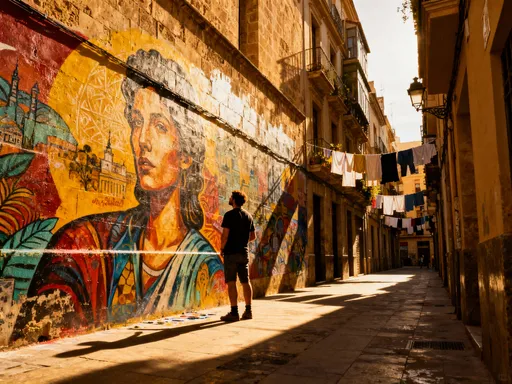
What sets Valencia apart is how seamlessly art integrates into the urban fabric. Within minutes of arrival, you’ll notice it—not as decoration, but as dialogue. A mural of a woman with eyes like constellations watches over a quiet street in El Carmen. A sculptural fountain in Plaza de la Virgen blends Gothic revival with contemporary water choreography. Even the tram stations feature mosaic details and subtle artistic motifs. This isn’t accidental; it’s intentional. The city has long championed public art as a form of civic identity, not just tourism appeal. The light—distinctly Mediterranean, sharp yet warm—enhances every surface, making colors appear more saturated, shadows more dramatic. It’s as if Valencia was designed to be seen through an artist’s lens.
Walking through the Jardín del Turia—the lush park that replaced a dried riverbed—you understand how space can be both functional and poetic. What was once a flood-prone river is now a 9-kilometer green ribbon dotted with sculptures, open-air theaters, and bridges designed by visionary architects. Families picnic near modernist sculptures; children chase each other past installations that look like fragments of dreams. The park itself is a masterpiece of urban planning and artistic vision, proving that beauty and utility need not be mutually exclusive. For the traveler, this first immersion signals something profound: in Valencia, art isn’t something you go to see. It’s something you live inside.
The Silk Exchange & Valencia Cathedral: Where History Meets Aesthetic Grandeur
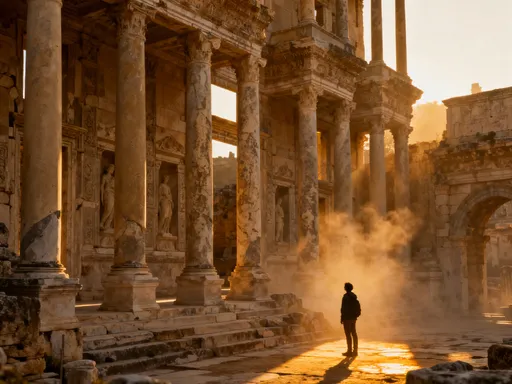
Two landmarks stand as enduring testaments to Valencia’s long-standing relationship with artistry and craftsmanship: the Lonja de la Seda and the Valencia Cathedral. Both are more than monuments—they are narratives carved in stone, telling stories of prosperity, faith, and aesthetic ambition. The Lonja, a UNESCO World Heritage site since 1996, was once the heart of the city’s silk trade, but today it resonates as a masterpiece of late Gothic civil architecture. Its soaring columns resemble palm trees, branching into ribbed vaults that seem to lift the ceiling toward the heavens. Every detail—the intricate carvings of fruits, knots, and mythical beasts—was executed with precision, not merely for ornament, but as a symbol of wealth, order, and civic pride.
What many visitors don’t realize is that the Lonja was never just a marketplace. It was a statement. In the 15th century, Valencia was one of the most powerful cities in the Mediterranean, and the Silk Exchange was its architectural declaration of status. The Salle of the Kings, with its stained glass and heraldic emblems, functioned as a tribunal where merchants settled disputes—justice administered beneath a canopy of artistic splendor. Today, walking through its halls evokes a sense of reverence, not just for the past, but for the idea that commerce and beauty can coexist. It’s a lesson that feels especially relevant in our modern world, where efficiency often trumps elegance.
Just a short walk away, the Valencia Cathedral presents a different kind of artistic evolution—one built through centuries of layering. Constructed over 800 years, its architecture is a tapestry of styles: Romanesque foundations, Gothic naves, a Baroque dome, and a Neoclassical façade. This lack of uniformity isn’t a flaw; it’s the point. Each era added its voice, creating a visual timeline of artistic values and spiritual aspirations. Inside, the atmosphere is hushed, reverent, but not somber. Light filters through stained glass, casting jewel-toned patterns across the stone floor. The cathedral is also believed by some to house the Holy Grail in its treasury—a claim that draws pilgrims and skeptics alike. Whether or not one believes the relic’s authenticity, the way it’s displayed—under soft light, within a simple alabaster case—speaks to a deep respect for symbolism and storytelling.
What makes these sites essential viewing for every traveler, not just history enthusiasts, is their emotional resonance. They are not frozen in time; they are active participants in the city’s present. Mass is still held in the cathedral. The Lonja hosts cultural events and exhibitions. These spaces were built to be used, not just admired. In that sense, they embody a philosophy central to Valencia’s artistic identity: art must serve life, not stand apart from it.
Inside the City of Arts and Sciences: Futurism in the Sunlight
If the old town is Valencia’s historical soul, the City of Arts and Sciences is its visionary future. Designed primarily by Santiago Calatrava and Félix Candela, this sprawling complex rises from the dry riverbed like a fleet of alien vessels docked in sunlight. Comprising six major structures—L’Hemisfèric, the Palau de les Arts Reina Sofía, the Museu de les Ciències, the Ágora, the Umbracle, and the Oceanogràfic—the complex is less a collection of buildings and more a single, sweeping work of environmental art. Its white concrete curves, titanium domes, and reflective pools create a dialogue between architecture, nature, and human imagination.
L’Hemisfèric, shaped like a giant eye, serves as an IMAX cinema and planetarium. But even if you never step inside, its exterior is a performance in light and reflection. At dawn, the curved roof glows softly; at midday, it blazes like a beacon. The surrounding water mirrors its form, doubling the visual impact. This interplay of structure and environment is no accident—Calatrava, trained as both an architect and engineer, designed every element to respond to natural forces. The way the light shifts across the surfaces throughout the day makes the complex feel alive, almost breathing.
The Oceanogràfic, the largest aquarium in Europe, is equally impressive. Its design mimics a water lily, with petal-like structures housing different marine ecosystems. Inside, visitors walk through transparent tunnels surrounded by sharks, rays, and schools of silver fish. But beyond the spectacle, what stands out is the artistic intent behind the experience. The lighting, soundscapes, and flow of space are carefully orchestrated to evoke wonder, not just education. It’s not merely a place to see animals; it’s a sensory journey into the mystery of the deep.
For visitors, timing is key. Early morning visits offer softer light for photography and fewer crowds. Sunset brings a golden wash across the white surfaces, making the entire complex glow. Weekdays are quieter, especially in the shoulder seasons. While the site can feel overwhelming in scale, taking it in slowly—perhaps starting with a walk through the Umbracle, a landscaped garden with native plants and sculptures—helps ground the experience. The City of Arts and Sciences isn’t just for science lovers or architecture buffs; it’s for anyone who believes that beauty can inspire curiosity and awe.
Street Art Beyond the Tourist Trail: Hidden Murals in Ruzafa and El Carmen
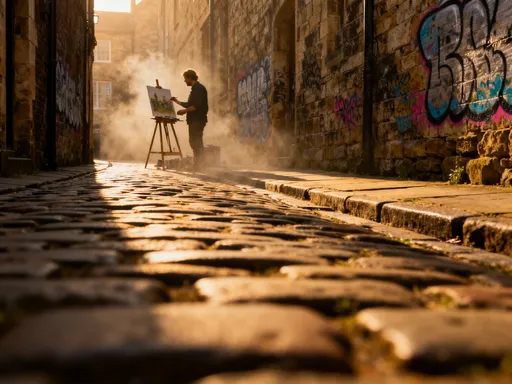
While Valencia’s grand monuments command attention, its true artistic pulse thrives in the streets—particularly in the neighborhoods of Ruzafa and El Carmen. These districts, once overlooked, have become open-air galleries where walls serve as canvases and alleys as corridors of expression. Ruzafa, with its mix of Valencian tradition and international flair, pulses with creativity. Cafés spill onto sidewalks, vintage shops line the streets, and nearly every surface seems to host a mural. Some are playful—a giant cat wearing sunglasses, a mermaid riding a Vespa. Others are profound: portraits of local elders, political commentary, or abstract pieces that seem to vibrate with energy.
El Carmen, nestled within the old town, is even more immersive. Its narrow, winding streets were once part of the medieval city walls, and today they feel like a labyrinth of artistic discovery. One moment you’re passing a traditional bakery; the next, you’re staring at a 15-meter-tall mural of a woman with roots growing from her hair into the building below. Artists from Spain and beyond have transformed these walls into a rotating exhibition, often with themes of identity, resistance, and community. Unlike static museum art, street art here is ephemeral—painted over, updated, or weathered by time. This impermanence is part of its power.
What makes Valencia’s street art culture so special is its relationship with the people. It’s not imposed from above; it grows from within. Local collectives organize mural festivals, inviting artists to contribute legally and meaningfully. The city supports this through designated zones and grants, recognizing that public art fosters pride and dialogue. For visitors, engaging with this culture means more than taking photos. It means pausing, reading the stories behind the images, and respecting the spaces as lived-in neighborhoods, not just backdrops.
A walking tour with a local guide can deepen the experience, revealing hidden pieces and the contexts behind them. But even wandering solo, with curiosity as your compass, can lead to unforgettable moments—a child pointing at a mural of a flying horse, an old man smiling at a painting of a scene from his youth. In these neighborhoods, art isn’t observed from a distance. It’s shared, felt, and part of everyday life.
Valencia’s Artisan Soul: Workshops, Ceramics, and the Craft Behind the Culture
Beyond the grand gestures of architecture and murals, Valencia’s artistry reveals itself in the quiet dedication of its artisans. In small workshops tucked behind bustling markets or along quiet side streets, generations of craftspeople keep traditions alive. Ceramics, in particular, hold a special place in Valencian culture. The nearby town of Manises has been a center of ceramic production since the 14th century, known for its lusterware—hand-painted tiles with metallic finishes that shimmer in the light. Today, studios in Valencia continue this legacy, producing everything from intricate azulejos (decorative tiles) to modern tableware.
Visiting a ceramics studio offers more than souvenirs; it offers connection. Watching an artisan dip a fine brush into mineral pigments and trace delicate floral patterns is a meditation in patience and precision. Many workshops welcome visitors for demonstrations or even hands-on workshops, where you can try your hand at painting a tile or shaping clay on a wheel. These experiences are not tourist gimmicks—they’re invitations to participate in a living tradition. The pride in craftsmanship is palpable, and the resulting pieces carry not just beauty, but history.
Other crafts thrive as well. The city’s silk heritage, celebrated at the Lonja, lives on in small ateliers where designers create scarves and textiles using traditional techniques. Horchata, the creamy drink made from tiger nuts, is another cultural artifact—produced in the same way for generations in the village of Alboraya. Visiting a horchatería in Valencia, especially in the summer, is a sensory experience: the cool glass, the sweet nutty flavor, the accompaniment of fartons (soft pastries for dipping). These are not just consumables; they are expressions of regional identity, crafted with care and passed down with love.
For the thoughtful traveler, supporting these artisans means more than shopping—it means sustaining culture. Buying a hand-painted plate, a silk scarf, or a bottle of locally made horchata isn’t just a memento; it’s a small act of preservation. It says: I see your work. I value your story. In a world of mass production, these handmade treasures remind us of the beauty of slowness, skill, and soul.
Festivals That Paint the City: Fallas and the Explosion of Creative Energy
No discussion of art in Valencia is complete without Fallas—the city’s most spectacular and deeply rooted artistic expression. Held every March in honor of Saint Joseph, the festival transforms Valencia into a living theater of satire, craftsmanship, and fire. For months beforehand, local artists and neighborhood groups—called *falleros*—work in secret, constructing massive papier-mâché sculptures known as *ninots*. These figures, some reaching five stories high, depict everything from political figures and pop culture icons to fantastical creatures and social commentary. The level of detail is astonishing: moving parts, painted faces, intricate costumes—all built to be burned.
The festival unfolds over five days, culminating in the *cremà*—the burning of the ninots. Each night, neighborhoods gather around their sculptures for music, dancing, and a final farewell before setting them alight. The climax is both joyful and melancholic—a celebration of creation and an acceptance of impermanence. The flames don’t signify destruction; they represent renewal. One of the most touching traditions is the *indult*, when a single ninot is spared from burning by public vote, preserved in the Museu Faller for posterity. It’s a powerful metaphor: even in a culture that embraces transience, some art is too meaningful to let go.
Fallas is not just a spectacle; it’s a communal act of creativity. Children help paint details; elders share stories; entire families spend evenings at the *casals* (clubhouses) preparing for the festivities. For visitors, experiencing Fallas means immersing in this energy—wearing traditional dress, enjoying *paella* in the streets, listening to brass bands fill the air with music. It’s loud, vibrant, and deeply emotional. And while the fireworks and noise can be overwhelming, the heart of the festival is clear: art, at its best, brings people together. It allows a community to laugh, reflect, and express itself boldly.
Even outside March, the spirit of Fallas lingers. The Museu Faller preserves dozens of rescued ninots, offering a year-round glimpse into this unique art form. And throughout the city, you’ll find echoes of its humor and craftsmanship in everyday life. Fallas teaches a valuable lesson: art doesn’t have to be permanent to be powerful. Sometimes, the most impactful creations are those meant to burn brightly—and briefly.
Why Valencia Changes How You See Art—And Travel
By the end of a visit to Valencia, something shifts. The way you see art, and perhaps the way you travel, is quietly transformed. This city refuses to let art be confined. It spills from galleries onto streets, rises from ancient stones into futuristic forms, and lives in the hands of potters, chefs, and festival builders. Valencia teaches that art is not a luxury, nor a passive experience. It is a language—one spoken through color, form, and community. It’s in the curve of a bridge, the pattern on a tile, the laughter at a street festival.
What makes this realization so powerful is its accessibility. You don’t need an art degree to feel it. You don’t need to rush from site to site. Valencia rewards slowness, curiosity, and presence. It invites you to look closely—to notice the mosaic on a bench, the brushstroke on a mural, the way light hits a fountain at dusk. In doing so, it redefines what it means to travel. It’s not about checking landmarks off a list. It’s about allowing a place to change you, even in small ways.
For women in their 30s to 55s—often balancing family, work, and personal dreams—Valencia offers something rare: a space to reconnect with creativity, not as a distant ideal, but as a living, breathing presence. It’s a reminder that beauty exists in the everyday, that culture can be felt as much as studied, and that travel can be both enriching and deeply personal. You don’t come to Valencia to escape life. You come to remember how to live it more fully.
So let the city surprise you. Let its art find you—in a quiet courtyard, on a sunlit wall, in the hands of a local artisan. Let it remind you that creativity isn’t reserved for the few. It’s all around us, waiting to be seen. And when you leave, you won’t just carry souvenirs. You’ll carry a new way of seeing—one painted in the colors of Valencia, and glowing with its quiet, enduring light.