Lost in the Marble: What They Don’t Tell You About Ephesus
Stepping into Ephesus, I expected ancient grandeur — and got it. But beneath the stunning columns and carved stones, I learned fast: not every highlight is on the map. Between crowded pathways and overlooked masterpieces, I discovered how easy it is to miss the soul of this cultural gem. What you don’t know can turn awe into frustration. Let me guide you through the beauty, the blunders, and the truths every traveler deserves.
First Impressions: The Grand Entrance and Its Hidden Truths
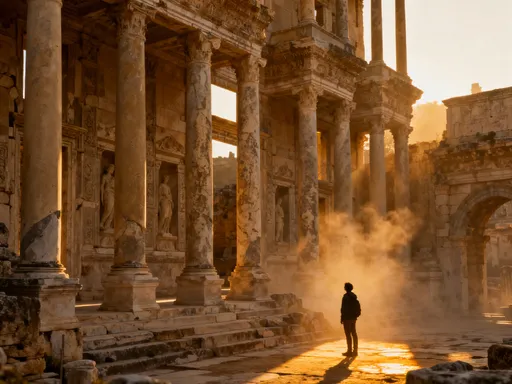
Walking through the Magnesian Gate into Ephesus, visitors are immediately met with a breathtaking panorama — marble columns rising like sentinels from a forgotten world, the sun glinting off polished stone, and the remnants of a city that once thrived as a center of commerce, culture, and religion. The first major landmark, the Library of Celsus, dominates the vista with its ornate façade, drawing gasps and camera clicks in equal measure. Yet, this iconic structure often becomes a magnet for crowds, especially between 11 a.m. and 3 p.m., when tour buses discharge waves of travelers. The intensity of midday light further complicates the experience, casting harsh shadows that obscure the delicate carvings on the library’s façade.
What many don’t realize is that the Library of Celsus was not merely a storehouse of scrolls but a symbolic monument to knowledge, wisdom, and Roman imperial pride. Built in the 2nd century AD in honor of Tiberius Julius Celsus Polemaeanus, a Roman senator, the library once housed around 12,000 scrolls. Its façade is rich with allegorical statues representing wisdom, virtue, intelligence, and valor. However, few pause long enough to study these figures, and even fewer notice the rear of the structure, where traces of original interior design and architectural symmetry remain visible. The backside, less photographed and often bypassed, reveals how the library was integrated into the broader urban layout of Ephesus.
Adjacent to the main thoroughfare lies the Terrace Houses, known as the "Houses of the Rich," where elite Ephesians once lived. These multi-level residences feature frescoed walls, mosaic floors, and advanced plumbing systems — rare comforts for their time. Yet, access to these homes is limited and often requires an additional ticket, leading many visitors to skip them. Those who do enter are rewarded with a vivid glimpse into domestic life in antiquity. The intricate mosaics depict mythological scenes and geometric patterns, while preserved heating systems under the floors — hypocausts — hint at the sophistication of Roman engineering. To fully appreciate Ephesus, one must resist the urge to rush. Slowing down at the entrance allows deeper engagement with both the grand and the subtle elements of this ancient city.
The Art That Speaks: Reading the Carvings and Mosaics
Ephesus is not a collection of silent ruins but a living narrative told through stone. Every frieze, capital, and floor tile carries meaning — if you know how to read it. The city’s artistic heritage reflects a fusion of Greek, Roman, and Anatolian influences, creating a visual language that speaks of power, faith, and daily existence. One of the most striking examples is the Temple of Hadrian, tucked slightly off the main Curetes Street. Its ornate entrance features a relief of Tyche, the goddess of fortune, crowning the city of Ephesus, symbolizing prosperity and divine favor. Above her, a scene of Romulus and Remus being suckled by the she-wolf ties Ephesus to the founding myth of Rome, reinforcing its political allegiance.
Further along the marble road, mosaics embedded in the floors of former homes and public buildings depict scenes from mythology and nature. A particularly well-preserved mosaic in one of the Terrace Houses shows Dionysus, the god of wine, riding a panther, surrounded by dancing maenads. Such imagery wasn’t merely decorative; it conveyed the homeowner’s cultural sophistication and religious affiliations. Similarly, floral and geometric patterns in black and white tesserae reflect both aesthetic preferences and technical mastery in craftsmanship.
Without context, these artworks risk becoming mere background scenery. A rushed visitor might admire the colors and forms but miss the stories they tell. This is where preparation makes a difference. Carrying a guidebook, downloading an audio tour, or even reading up before arrival transforms passive sightseeing into active discovery. Understanding that a carving of a bull might reference Zeus’s abduction of Europa, or that an eagle symbolizes Jupiter’s authority, deepens the experience. Art in Ephesus was never just for beauty — it was communication, propaganda, and identity all carved in stone.
Crowds vs. Culture: Navigating Peak Hours
One of the greatest challenges facing modern visitors to Ephesus is timing. Located near the port city of Kuşadası, the site receives a significant influx of cruise ship passengers, particularly from April to October. By mid-morning, the main avenues — especially the marble-paved Curetes Street and the staircase leading to the Library of Celsus — become congested with tour groups moving in coordinated waves. The experience of walking through ancient history can quickly devolve into a shuffle between selfie sticks and sun hats.
Visiting during peak hours not only diminishes comfort but also limits the ability to engage with the site’s quieter, more contemplative spaces. Sound echoes off stone walls, making it difficult to hear guide commentary or even think clearly. The sheer volume of people can obscure views, block access to side paths, and create bottlenecks at photo spots. In such conditions, the emotional resonance of Ephesus — its sense of timelessness and grandeur — becomes harder to feel.
The solution lies in strategic timing. Arriving at opening time, typically around 8 a.m., offers a transformative experience. The air is cooler, the light is soft and golden, and the site is still relatively quiet. This early window allows for uninterrupted exploration of the Library, the Temple of Hadrian, and the Terrace Houses without jostling for space. Alternatively, visiting in the late afternoon, especially in the summer months, provides a second opportunity to enjoy the ruins as the day cools and many tour groups begin to depart.
For those seeking solitude, the upper terrace paths — less frequented due to their elevation and distance from main attractions — offer a peaceful retreat. These elevated walkways provide panoramic views of the city layout and the surrounding hills, once part of the sacred landscape of Artemis, the city’s patron goddess. Walking these paths, one can almost hear the echoes of ancient footsteps and imagine Ephesus not as a tourist destination, but as a living, breathing metropolis.
What Your Guide Might Skip: The Lesser-Known Monuments
Most guided tours of Ephesus follow a standard route: the Magnesian Gate, Curetes Street, the Temple of Hadrian, the Library of Celsus, the Great Theater, and perhaps a brief stop at the Terrace Houses. While this path covers the highlights, it often omits several smaller but equally significant structures that reveal deeper layers of the city’s history. The Odeon, for instance, is a semi-circular council chamber that once seated around 1,400 people. Smaller than the Great Theater, it was used for municipal meetings, musical performances, and judicial proceedings. Its well-preserved acoustics and tiered seating offer insight into civic life, yet it is frequently passed by in favor of more photogenic sites.
Another overlooked gem is the Scholasticia Baths, located near the end of the main road. Though largely in ruins, the complex once served as a public bath and social hub. Its remains include vaulted ceilings, mosaic fragments, and remnants of the hypocaust system. These baths were not just for hygiene but for community interaction — places where citizens gathered, exchanged news, and conducted informal business. The architectural details, such as Corinthian capitals and decorative pilasters, reflect the aesthetic values of Roman urban planning.
Similarly, the Fountain of Trajan, nestled at the base of a hill along Curetes Street, is often missed despite its striking design. Built in the 2nd century AD, it features a semi-circular basin, niches for statues, and intricate carvings of mythological figures. Water once flowed through spouts shaped like lion heads, a symbol of strength and imperial authority. The fountain was both functional and symbolic — a place of refreshment and a monument to imperial generosity.
These lesser-known sites may not dominate travel brochures, but they enrich the visitor’s understanding of Ephesus as a fully functioning city, not just a showcase of monumental architecture. By stepping off the main path, travelers gain a more complete picture of daily life, governance, and social structure in antiquity.
Dress, Hydration, and Footwear: Practical Barriers to Enjoyment
No amount of historical knowledge can compensate for physical discomfort during a visit to Ephesus. The site spans over a mile from end to end, with uneven marble surfaces, steep staircases, and minimal shade. Without proper preparation, even the most enthusiastic traveler can find their energy drained by midday. The key to a rewarding experience lies in practical considerations: footwear, clothing, sun protection, and hydration.
Marble streets, while beautiful, are slippery when worn smooth and unforgiving underfoot. High heels, flip-flops, or thin-soled shoes are ill-suited for the terrain. Sturdy walking shoes with good grip are essential, especially on the inclines leading to the Terrace Houses or the upper city. Blisters and sore feet can quickly overshadow the wonder of ancient architecture.
Summer temperatures in western Turkey often exceed 95°F (35°C), making sun exposure a serious concern. A wide-brimmed hat, UV-protective clothing, and sunscreen are strongly recommended. Many visitors underestimate the intensity of the Mediterranean sun, particularly on reflective stone surfaces. Heat exhaustion can set in quickly, especially for older adults or those with underlying health conditions. Carrying a refillable water bottle and drinking regularly is not just advisable — it’s necessary.
Bringing a small backpack with essentials — water, snacks, a portable fan or misting bottle, and a lightweight scarf for shade — can make a significant difference in comfort and endurance. Planning rest breaks at shaded benches or under the colonnades allows time to absorb the surroundings without rushing. Physical well-being directly impacts emotional and intellectual engagement with the site. When the body is comfortable, the mind is free to wander through time.
Photography Pitfalls: Capturing Art vs. Missing the Moment
Modern travel is inseparable from photography, and Ephesus offers countless opportunities for stunning images. The Library of Celsus at golden hour, the Great Theater spilling down the hillside, and the intricate mosaics of the Terrace Houses are all worthy subjects. Yet, the pursuit of the perfect photograph can sometimes come at the expense of presence. Many visitors spend more time framing shots, adjusting filters, or reviewing images than actually observing the details before them.
There is a difference between seeing and recording. A photo may capture the façade of the Library of Celsus, but it cannot convey the texture of the marble, the play of light on carved acanthus leaves, or the quiet dignity of standing in a space walked by philosophers, merchants, and emperors. Over-reliance on screens — whether phone, tablet, or camera display — creates a barrier between the viewer and the viewed.
A balanced approach enhances both memory and mindfulness. Taking a few well-composed photos is natural and meaningful, but so is putting the camera down. Observing with the naked eye allows for deeper sensory engagement. Notice how the marble feels under your fingertips, how shadows shift across inscriptions, or how the breeze carries the scent of wild thyme from nearby hills. These are the moments that linger long after the photos are forgotten.
For those who wish to photograph responsibly, consider limiting screen time, using manual settings to appreciate lighting and composition, and avoiding flash in enclosed spaces where it may damage fragile pigments. Photography should serve the experience, not replace it.
Beyond Ephesus: Extending the Cultural Journey
The story of Ephesus does not end at the site’s exit gate. To truly understand its artistry and historical significance, a visit to the Ephesus Archaeological Museum in Selçuk is essential. Located just a short drive away, this well-curated museum houses artifacts too delicate or valuable to remain outdoors. Among its treasures are the original statues of the Seven Sleepers, marble sarcophagi with intricate reliefs, and a reconstructed version of the cult statue of Artemis, once housed in the great Temple of Artemis — one of the Seven Wonders of the Ancient World.
The museum provides context that the open-air ruins cannot. Indoor lighting allows for close examination of fine details — the fold of a toga, the expression on a god’s face, the precision of a sculptor’s chisel. Informational panels, available in multiple languages, explain the religious, political, and social roles of the artifacts. For families, the museum offers a quieter, climate-controlled environment where children and adults alike can engage with history at a slower pace.
Another meaningful extension is a visit to the nearby House of the Virgin Mary, located on Mount Koressos. While its historical authenticity is debated among scholars, the site holds spiritual significance for many visitors. The small stone chapel, nestled in a peaceful valley, is a place of quiet reflection and prayer. Whether one views it as a historical site or a place of faith, its serene atmosphere offers a contrast to the bustling ruins.
Together, the archaeological site, the museum, and the surrounding landscape form a complete cultural tapestry. Viewing them as parts of a single journey — rather than isolated stops — deepens appreciation and creates a more lasting impression.
Conclusion: Seeing Ephesus with Clearer Eyes
Ephesus is more than a checklist of ancient wonders. It is a place where history, art, and human experience converge. Yet, without preparation and intention, even the most magnificent sites can become sources of fatigue and frustration. The difference between a superficial visit and a meaningful encounter lies in awareness — of timing, of context, of physical needs, and of one’s own pace.
By arriving early, wearing appropriate clothing, seeking out lesser-known monuments, and balancing photography with presence, travelers can move beyond the surface and connect with the soul of Ephesus. The carvings on a temple, the curve of a mosaic, the echo in an ancient theater — these are not just relics but voices from the past, waiting to be heard.
And beyond the stones, the journey continues — in museums, in quiet chapels, in the hills that once cradled a great city. To visit Ephesus is not merely to see it, but to understand it, feel it, and carry its legacy forward. With clearer eyes and a thoughtful approach, every traveler can walk its marble paths not as a spectator, but as a witness to enduring human creativity and spirit.