Beyond the Temples: The Hidden Commercial Heart of Siem Reap
You know what? Everyone goes to Siem Reap for Angkor Wat — and yeah, it’s mind-blowing. But what if I told you the real magic happens off the radar, in buzzing lanes where locals shop, eat, and live? I’m talking about the city’s hidden commercial zones — not tourist traps, but authentic hubs humming with energy, color, and flavor. This is where culture meets commerce in the most unexpected ways. While millions come to marvel at ancient stone towers and intricate bas-reliefs, few pause to notice the vibrant economic life pulsing just beyond the temple gates. These everyday spaces, often overlooked, are where Siem Reap truly breathes — where families earn their livelihoods, communities connect, and traditions evolve. To understand this city fully, one must look beyond its monuments and into the rhythm of its streets.
The Tourist Facade vs. the Local Reality
Siem Reap’s global reputation rests on its crown jewel — Angkor Wat — and the well-worn circuit of temples that surround it. Alongside this heritage, a parallel world has emerged: one shaped by tourism. The area around Pub Street and the Old Market buzzes with energy, lined with souvenir stalls, international restaurants, and guesthouses catering to every budget. These spaces are lively and convenient, designed to welcome visitors with familiar comforts. Yet, for all their vibrancy, they offer a curated version of Cambodia — polished, accessible, and often predictable. Behind this carefully maintained facade lies a different reality — one less visible but far more revealing.
This other Siem Reap operates in neighborhoods where tourists rarely wander, where commerce isn’t performed for an audience but lived as a daily necessity. Here, shopkeepers don’t speak English by default, prices aren’t quoted in USD, and the rhythm of life follows the sun, not the tour schedule. These areas are the city’s economic backbone, sustaining families and communities through trade that has little to do with ticket sales at Angkor. From morning markets to neighborhood repair shops, these spaces reflect Cambodia’s deep-rooted mercantile traditions, where barter, trust, and personal relationships still shape how business is done.
Recognizing this contrast isn’t about dismissing the tourist experience — Angkor Wat is, after all, a wonder of human achievement. Instead, it’s about expanding the narrative. When travelers limit themselves to the tourist corridor, they miss the fuller picture of how Siem Reap functions and thrives. The city isn’t just a gateway to the past; it’s a living, working present. Understanding this duality allows for a richer, more respectful journey — one that acknowledges not only what the world comes to see, but also how the local world actually lives.
Ankor Thmor Market: Where Commerce Breathes Authenticity
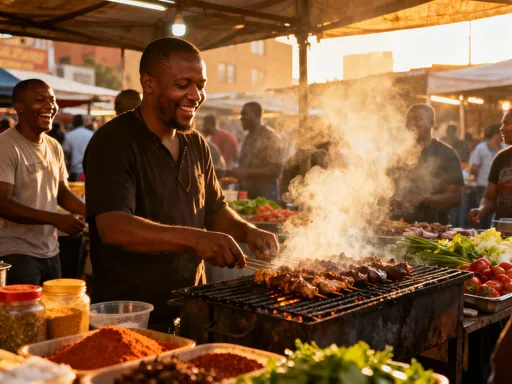
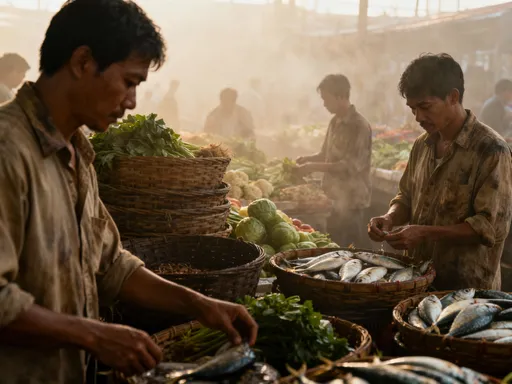
Just a short tuk-tuk ride north of the city center, Ankor Thmor Market opens long before dawn, when the streets are still quiet and the air carries a cool hush. By 5:00 a.m., wooden carts roll in from nearby villages, piled high with fresh vegetables, fragrant herbs, and bundles of rice stalks. Fishermen arrive with crates of glistening snakehead fish and catfish hauled from the Tonlé Sap, their catch still damp from the lake. Butchers hang slabs of pork and chicken under temporary awnings, while women in conical hats arrange pyramids of mangoes, rambutans, and papayas. This is not a market staged for visitors — it’s where Siem Reap feeds itself, and it does so with relentless energy and purpose.
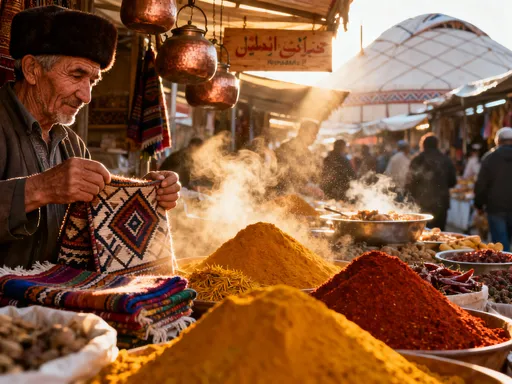
Unlike the night market, where silk scarves and carved elephants dominate, Ankor Thmor is raw, unfiltered, and deeply functional. There are no English price tags, no Instagrammable displays — just the honest chaos of commerce in motion. The scent of lemongrass mingles with wood smoke and damp earth. Vendors shout prices, children weave between stalls, and motorbikes squeeze through narrow aisles, loading up on supplies for family-run eateries and roadside stalls. It’s a sensory immersion, overwhelming at first, but deeply rewarding for those willing to slow down and observe.
For the curious traveler, a visit here offers rare access to the rhythms of Cambodian daily life. You’ll see how a family budgets for the week, how farmers negotiate with buyers, and how seasonal changes shape what’s available. You might watch an elderly woman hand-grind turmeric with a stone mortar, or a young couple haggle gently over the price of eggplants. These interactions aren’t for show — they’re the quiet, essential transactions that keep households running. By witnessing them, visitors gain insight not just into food culture, but into values: thrift, resilience, and community interdependence.
Wat Bo Road: The Quiet Business Backbone
Parallel to the more famous streets of Siem Reap lies Wat Bo Road — a modest, tree-lined avenue that hums with quiet industry. Far from the neon glow of Pub Street, this stretch is home to a constellation of small, family-run businesses that have sustained the neighborhood for decades. Here, tailors sit cross-legged beside sewing machines, stitching custom shirts and dresses from bolts of cotton and silk. Pharmacists in white coats dispense medicine from glass counters, while repairmen tinker with motorbike engines in open-air garages. Cafés with simple wooden tables serve strong, sweet coffee to locals on their way to work.
What makes Wat Bo Road remarkable is its continuity. Many of these businesses have been passed down through generations, operating on principles of trust and reputation rather than digital marketing or flashy signage. A tailor might remember your measurements from last year; a pharmacist might offer advice without charging a consultation fee. These relationships aren’t transactional in the modern sense — they’re rooted in mutual respect and long-term connection. The pace is slower, the interactions more personal, and the atmosphere more grounded than in tourist-heavy zones.
Walking along Wat Bo Road feels like stepping into the city’s quiet pulse — the part that keeps beating whether tourists arrive or not. It’s a reminder that Siem Reap is not just a destination, but a home. The shops here don’t rely on foot traffic from guided tours; they thrive because they serve real needs. A broken zipper gets fixed. A prescription is filled. A child’s school uniform is altered. These may seem like small moments, but together, they form the fabric of daily life. For visitors, a stroll down this road offers a chance to witness authenticity not as a performance, but as a practice — lived, unembellished, and deeply human.
The Rise of Social Enterprise Hubs
In recent years, a new kind of commercial space has quietly taken root in Siem Reap — one that blends business with social purpose. These are not your typical souvenir shops. Instead, they are training cafés, women-led cooperatives, and artisan workshops that use commerce as a tool for empowerment. Tucked into unassuming storefronts or hidden down quiet alleys, these enterprises are easy to miss — but for those who seek them out, they offer some of the most meaningful travel experiences in the city.
Take, for example, a café where young adults with disabilities learn barista skills, serving lattes with quiet confidence. Or a textile cooperative where widowed women weave intricate patterns into scarves and tote bags, preserving traditional techniques while earning a stable income. These spaces are more than shops — they are classrooms, sanctuaries, and engines of change. They reflect a growing movement in Cambodia: one that uses entrepreneurship not just to make a profit, but to heal, uplift, and rebuild.
What sets these hubs apart is their intentionality. Every purchase has a story — a young person gaining independence, a family escaping poverty, a craft being preserved against the tide of mass production. Travelers who support these enterprises aren’t just buying souvenirs; they’re contributing to long-term community development. And because these businesses often operate on slim margins, even small acts — like choosing a locally made candle over a factory-made trinket — can make a tangible difference. In a world where tourism can sometimes feel extractive, these spaces offer a path toward reciprocity.
Navigating the Unseen: How to Explore Responsibly
Exploring Siem Reap’s hidden commercial zones is a privilege, not a right. These are not attractions designed for visitors — they are living, working environments where people earn their livelihoods and raise their families. Entering them requires a mindset of respect, humility, and mindfulness. The goal isn’t to extract experiences, but to engage with awareness and care.
One of the most important principles is quiet observation. Instead of rushing in with cameras and questions, take a moment to pause and watch. Notice how people interact, how business is conducted, how space is shared. If you wish to take photographs, always ask permission — and be prepared for a polite refusal. In many communities, being photographed without consent feels invasive, even if the intent is admiration. A smile and a nod often go further than a lens.
Language also matters. Learning a few basic Khmer phrases — such as “sous-day” (thank you) or “lop tai” (how much?) — signals respect and opens doors to warmer interactions. Cash is still king in most of these areas, so carrying small bills in Cambodian riel or US dollars is practical and considerate. And when shopping, buy with intention. Choose items that are thoughtfully made, support fair wages, and reflect genuine craftsmanship. Avoid haggling aggressively — in places where margins are thin, every dollar counts.
Ultimately, responsible exploration means recognizing that you are a guest. Your presence should not disrupt the flow of daily life. By moving gently, listening closely, and spending wisely, you help preserve the authenticity of these spaces — ensuring they remain vibrant for locals, not just visible to visitors.
Why These Spaces Matter Beyond Shopping
The hidden commercial zones of Siem Reap are more than places to buy goods — they are living archives of culture, resilience, and adaptation. They preserve traditions that predate modern tourism: the art of hand-weaving, the knowledge of herbal remedies, the skill of repairing what’s broken rather than replacing it. These practices aren’t frozen in time; they evolve, absorbing new influences while holding onto core values. In a tailor’s shop, you might see a traditional pattern reimagined on a modern dress. In a market, you might hear Khmer spoken alongside snippets of Thai or English — a quiet testament to Cambodia’s openness.
These spaces also reveal the true economics of survival and dignity. For many families, a small shop or stall is not just a business — it’s a source of pride, independence, and stability. It allows parents to send children to school, repair a roof, or save for the future. When travelers support these enterprises, they become part of that story — not as saviors, but as allies in a shared human journey.
Moreover, these neighborhoods demonstrate how cities adapt. Siem Reap has grown rapidly due to tourism, yet its local economy has not been entirely reshaped by it. Instead, it has integrated global influences while maintaining its own rhythm. You see this in the way a family-run eatery now accepts credit cards but still cooks with recipes passed down from a grandmother. Or in how a cooperative uses social media to reach international customers while training artisans in age-old techniques. This balance — between old and new, local and global — is not easy to achieve, but it’s visible here, in the quiet corners of the city.
Redefining the Siem Reap Experience
Visiting Angkor Wat is a profound experience — few sights rival its grandeur and spiritual depth. But limiting your understanding of Siem Reap to its temples is like reading only the first chapter of a rich and complex book. The city’s hidden commercial zones invite travelers to turn the page — to move beyond observation and into connection. They offer a chance to see not just what Cambodia was, but what it is, and what it is becoming.
When you step into a local market, chat with a tailor, or sip coffee at a social enterprise café, you shift from being a spectator to becoming a participant. You’re no longer just passing through — you’re engaging with the heartbeat of the city. And in that engagement, something subtle but powerful happens: your travel transforms. It becomes less about collecting photos and more about building understanding. Less about consumption and more about contribution.
This kind of travel stays with you. Years later, you might forget the exact layout of Angkor Wat’s galleries, but you’ll remember the woman who smiled as she handed you a warm mango sticky rice wrapped in banana leaf. You’ll recall the sound of a sewing machine in a tiny shop on Wat Bo Road, or the pride in a young barista’s voice as they told you their name. These moments, small and unscripted, are the ones that shape memory and deepen empathy.
So the next time you plan a trip to Siem Reap, consider going beyond the temples. Seek out the places where life unfolds quietly, where commerce is more than exchange — it’s community. In doing so, you won’t just see Cambodia more clearly. You’ll leave a little more connected, a little more changed, and a lot more grateful for the quiet magic that happens when you step off the beaten path.